Fave event of 2015: Correfoc. Devils chasing people around with fire to the soundtrack of constantly beating drums. What could go wrong? One of the craziest things I've ever been to. Someone would shut this down in North America with extreme prejudice. But in Catalunya, okay.
And if you're a scared looking Anglo tourist, just know they're probably going to target you. I didn't look scared I guess, so I got to dance out with one of the devils, and burned my phone in the process. 100% worth it.
Fave pic of 2015 is from the same event:

Everything about this was awesome.
First runner up from Iceland:

Fave picture of me to showcase my narcissism which is a necessary part of every blog post: Me on St Patrick's day when I always wear orange. This also showcases my contrariness. Proud to be a protestant! And not a republican, in any sense of the word. I was also very excited about the Queen reaching the milestone of longest reigning female monarch EVAR.

And before an ignorant moron says anything: when Canadians refer to "the Queen" we mean the Queen of Canada. Because she is--The Queen of Canada. It's one of her titles, look it up aholes.
First runner up: me and Christina looking at my phone at midnight in Iceland after getting back from the Blue Lagoon. It was cloudy unfortunately so you couldn't actually see the sun that night. But you can see how light it was.

The second runner up would be the pics of me and Holly being judgy about archetecture or the ones Holly took of me and mem. After all this time Mem still gives
me a really good disapproving side eye. But mem doesn't ever post
pictures of mem. Did I ever mention he refused to tell me his NAME for
like a year and I just had to find it out? This is why he will always be
MEM. Holly doesn't post pictures of Holly either, but at least she's always been Holly. That said getting her last name out of her took some work. Haha.
People get readyAnd finished it off by declaring "I believe!" Man eyes so watery people all cutting up onions
There's a train a-coming
You don't need no baggage
You just get on board.
All you need is faith
To hear the diesels humming
Don't need no ticket
You just thank the Lord.

After so many events reminding us that we're aliens here and will never belong or be truly welcome, to be reminded that one day we'll make our journey home was powerful. Although it was another "WHY HE NOT HERE YET" moment for me. Had a lot of those this year.
Anyway they were a last minute addition to the folk fest and I was definitely more excited to see them than anyone else. First runners up were the many other good performances at Folk Fest, including Sheepdogs, Bahamas, Vance Joy and Blue Rodeo, but this one was the highlight for me. :)
I believe...but I wish it wasn't taking so long.
Fave album from 2015: Music in Exile by Songhoy Blues.
Blues songs about exile banned by Islamic extremists seems quite fitting for the year somehow. Plus this is pure blues, but also purely African. None of the unnecessary grandstanding that goes on in American blues today, it feels closer to the spirit of the blues of the past than a lot of what is being made now. Maybe it's the hardship and the defiance that makes great blues. That's despite the fact that I have no idea what they're saying--but then again I still don't know what Bukka White was saying in half his songs. So there's that.
The entire album is so good and definitely the one I listened to most this year. It's the main reason I keep up spotify on my phone. Well and now the Beatles are on there :P
First runner up: Healer by Alex Cuba
Like any good fan, I was one of the first people to contribute to the kickstarter campaign, heh. I admit I missed the horns in this one and could have done without all the English (hah), but I think he is really going his own direction with it. I hope he wins the Grammy! :) I'm excited to see him perform in Regina again, hopefully sans old grumpus grumpi this time. Also waiting to see what The Cuban Bus ends up like.
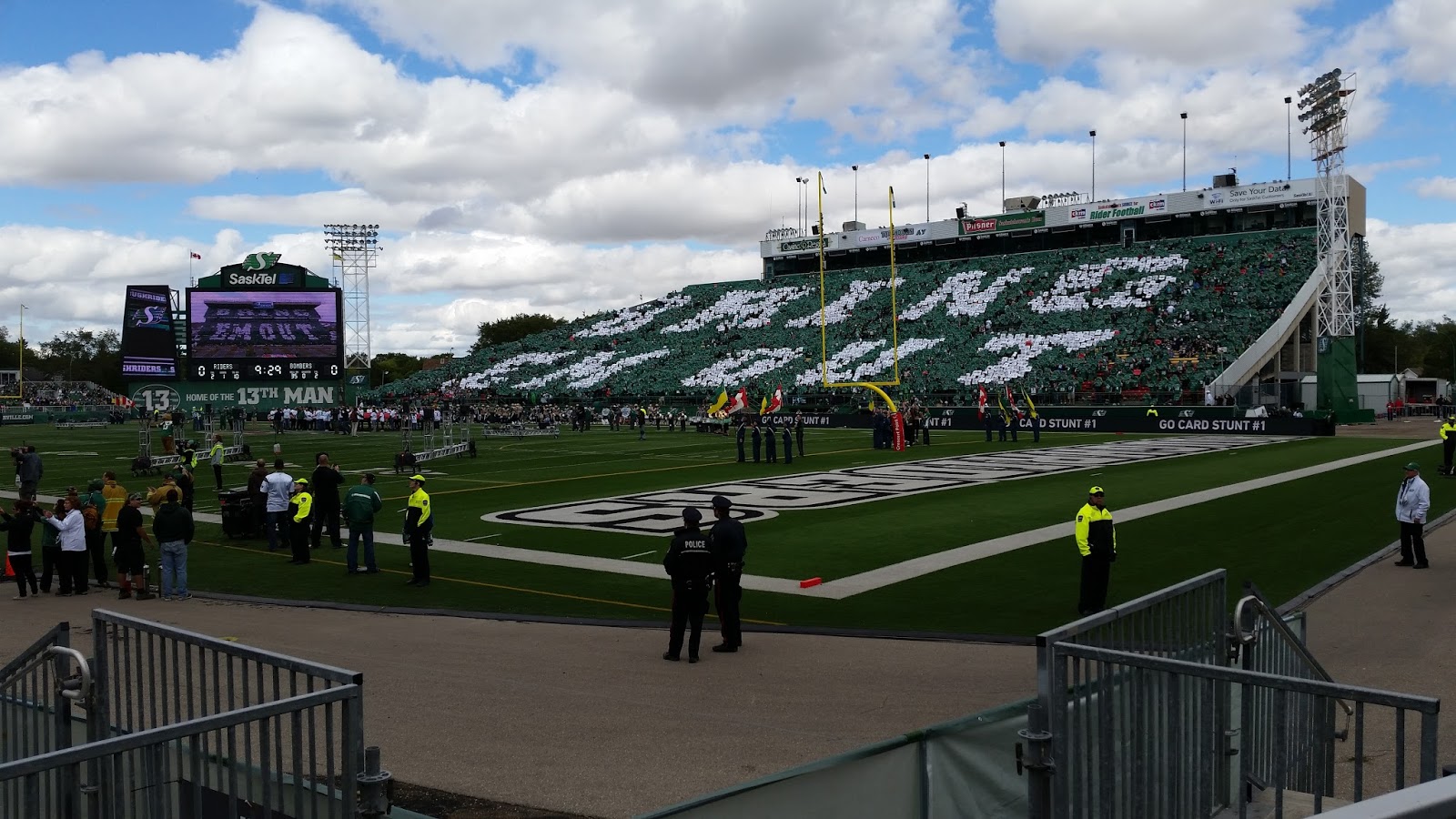
Best Moment of a Terrible Season: The Labour Day game, which we actually won. And got to do a cool card trick for. I'm going to miss Taylor Field. :(

Fave meal of 2015: I got to have Real Lox from the Jewish deli in Pittsburgh, courtesy of Holly. Even though I got mine with eggs. :P And yes it's totally dorky to add your favorite meal to such a list. But it's not like I was ever good at caring what other people thought.
First runner up: Real Seafood in Barcelona for my birthday, despite the shrimps staring at me dolefully as I dismembered them. Also did you know calamari is actually tender and good? Yeah not in a landlocked province it isn't.
I have to admit birthday was was better this year, mostly because of the Brazilian acrobats that performed--twice! :D Happy Birthday to me. This is prolly why the implicit bias tests all tell me I am strongly biased in favour of black people.
Most Obnoxious Char-like Project of 2015: Learning Spanish. Stuck at "you suck" A1 level. Pheh. So bad at languages. Still reading the bible in Spanish. I think I prefer the reading and writing to the speaking and listening anyway, which kind of makes sense given that there are no Spanish people here and I'm an introvert. But if I'm going to take over Latin America I have to get this figured out. It's less hard than French for sure, I was at A1 level with that after taking it for YEARS with professional instruction. Admittedly our french teachers were kind of bad though and in some cases more interested in the students than the subject.
My fave Spanish Learning tool has been Language Transfer. Because the discussion of etymology and things is almost more interesting than the language. Maybe that's why I'm still at YouSuckA1. Then I saw this in Barcelona:

Yeah ENGLISH.
Anyway. That's my list of highlights for the year.


